
Solar surplus charging
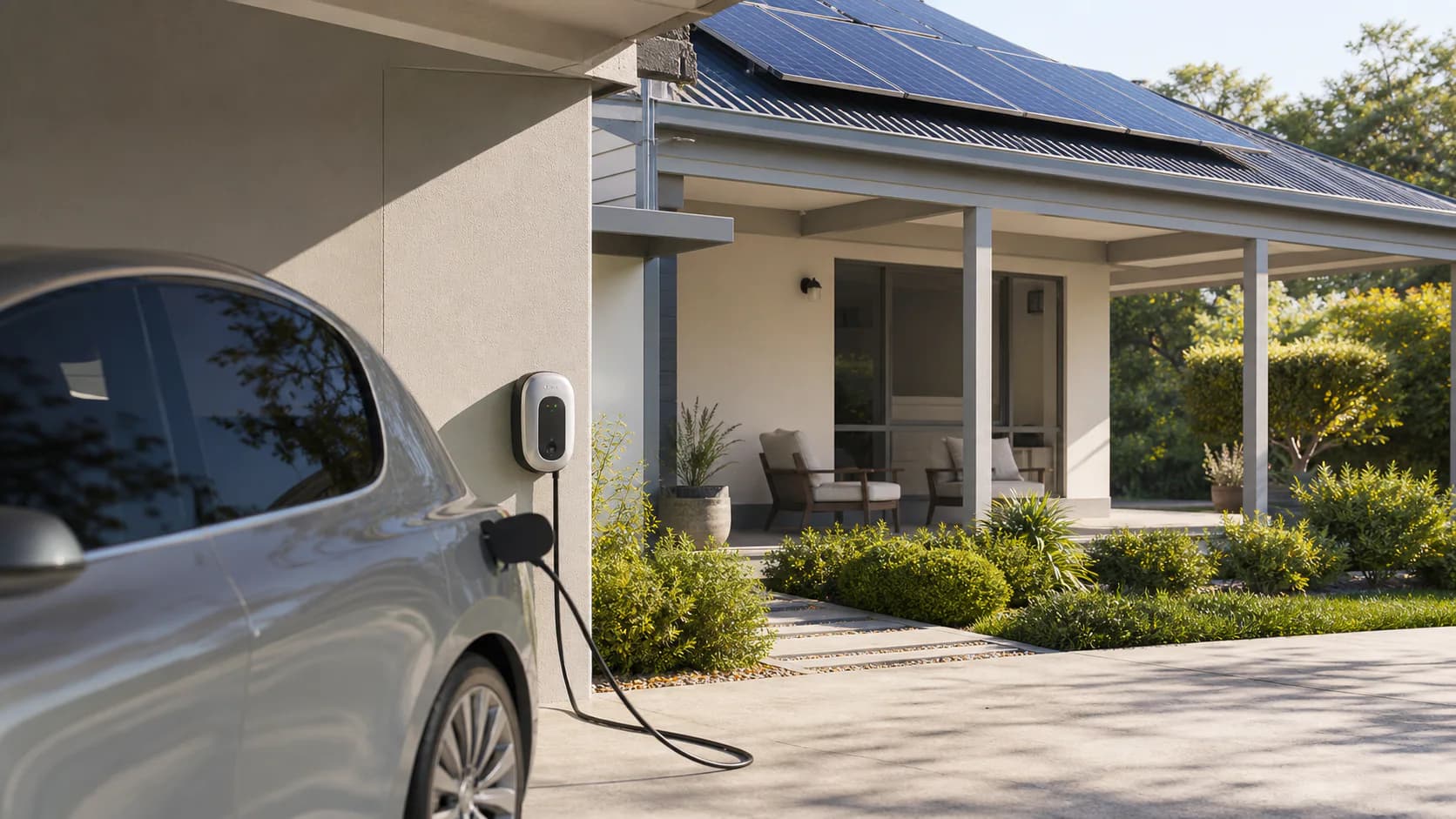
Use spare daytime solar when the vehicle is home and the charger supports solar-aware control.
EV charging
A wall socket is slow and limited. Solar Sparkies designs EV charging around phase supply, switchboard capacity, solar surplus, off-peak tariffs, battery plans and daily driving habits.
Charging strategy
We plan charger power, cable runs, protection, load control and app setup before installation. That keeps the system useful for the current vehicle and ready for the next one.
Use spare daytime solar when the vehicle is home and the charger supports solar-aware control.
Charge around tariff windows when solar is not available or the vehicle is parked overnight.
Protect the switchboard by reducing charger draw when other large household or site loads are active.
Set charger behaviour so the car, home battery and grid import strategy do not fight each other.
Site checklist
Charger power is only one part of the job. The site check should cover supply, protection, cable route, usage timing and how the charger will coordinate with solar or battery storage.
01
Single-phase and three-phase sites have different charger pathways, charge speeds and load limits.
02
Capacity, protection, cable route and meter position are checked before the charger location is confirmed.
03
Daily kilometres, daylight parking and future vehicle plans decide whether solar surplus mode is useful.
04
The app, schedules, load balancing, user access and monitoring are set up during handover.
For homes, the goal is usually simple charging that works with solar and tariff windows. For workplaces, the design also considers parking bays, user access, billing, demand control and whether future fleet charging is likely.
Quote details
A useful charger quote should include photos of the switchboard and preferred parking location, vehicle model, phase supply if known, and whether solar or battery storage is already installed.
Service areas
We map shade, tariffs, STC value, battery eligibility, switchboard readiness, commercial load timing and future EV demand before recommending a package. The first step is your postcode, bill, site type and roof notes.